A burst pipe is one of the most stressful things that can happen at home. Water can spread quickly through floors, walls and ceilings, and the longer it runs, the more damage it causes. The good news is that a few quick actions in the first minutes make a big difference. This guide walks you through them, explains why pipes burst and covers what to expect from the repair.
Step 1: Turn off the water
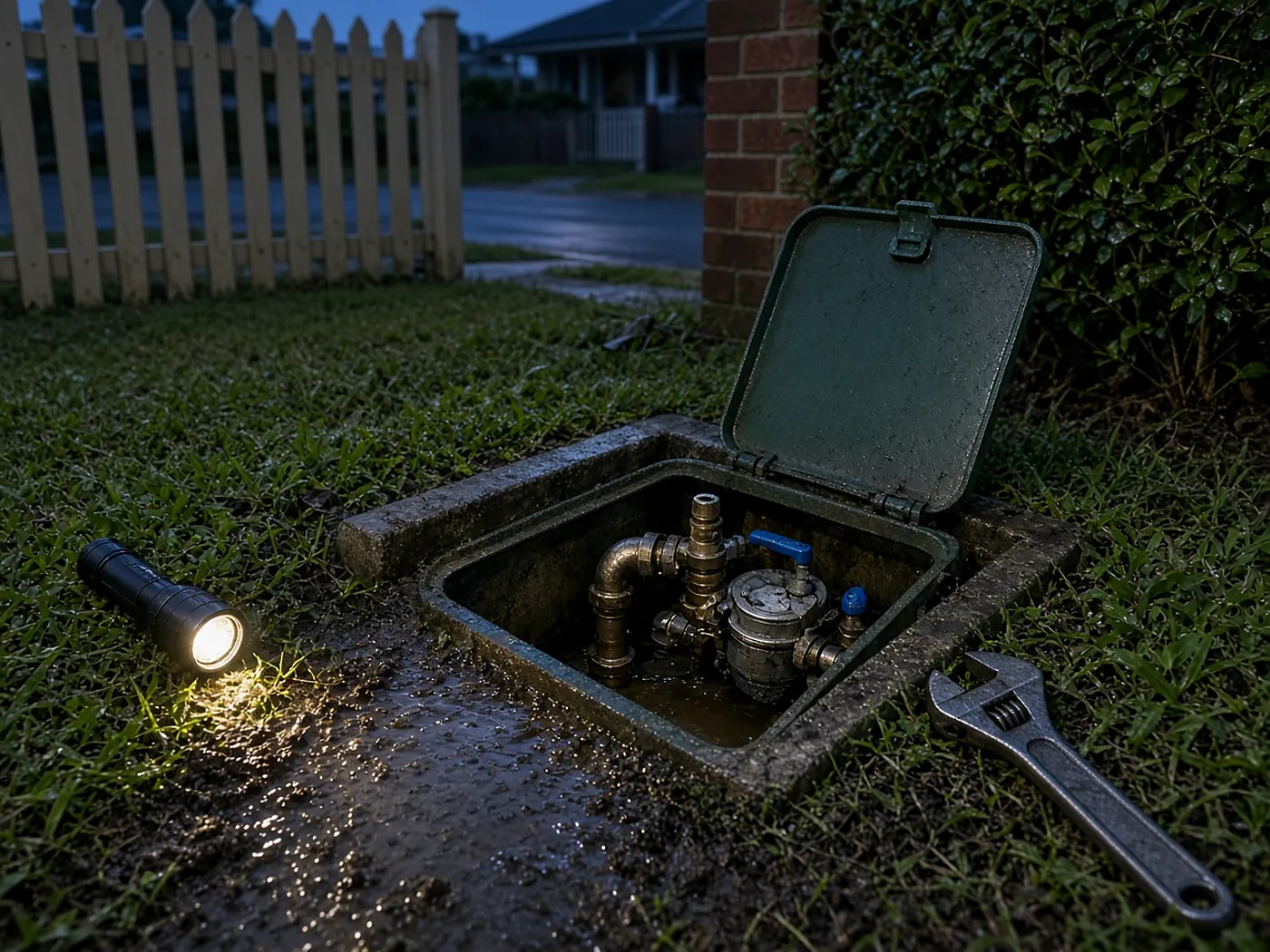
Go straight to the main stop valve. In most Berwick homes it is at the water meter near the front boundary, in a small box in the garden or nature strip, or beside the front fence. Turn the handle clockwise until it stops. If the valve is stiff, use a cloth for grip, but do not force it so hard that it breaks. If the burst is on a pipe that feeds one fixture, such as a toilet or sink, closing the isolation valve under that fixture may be enough.
If your hot water system is involved, turn off the power to the unit at the switchboard as well, and close the cold water valve at the tank.
Step 2: Make the area safe
Water and electricity do not mix. If water is near power points, appliances, light fittings or the switchboard, turn off the power to that area or to the whole house at the switchboard, if it is safe to reach. Keep children and pets out of wet areas. If a ceiling is sagging with water, stay out from under it.
Step 3: Limit the damage
Move furniture, rugs, electronics and valuables away from the water. Use towels, buckets and a mop to soak up what you can. Open doors and windows to start drying the area. If water has come through a ceiling, a bucket under the drip point and a small hole made in the bulge of the plaster can let the water drain in a controlled way, but only do this if you are confident and it is safe.
Step 4: Record it and get help
Take photos and short videos of the burst pipe and any damage before you clean up too much. These help with insurance claims and help us understand the problem. Then send the job through our quote form marked Emergency, with a photo if possible.
Why pipes burst
Pipes burst for many reasons. Older copper and galvanised pipes can corrode, wear thin and split. Joints and fittings can fail with age. High water pressure puts constant strain on the whole system. Pipes that are not properly clipped can vibrate and rub against frames until they wear through. Ground movement under slabs can stress buried pipes. And in newer homes, a screw or nail driven into a wall when hanging shelves or a TV is a common cause.
Flexible braided hoses under sinks, basins and toilets are another frequent culprit. They contain a rubber inner tube that perishes over time and can let go suddenly.
What happens during the repair
The plumber first confirms the water is off and the area is safe, then finds the damaged section. A small split can often be repaired by cutting out the damaged piece and joining in a new section. If the pipe is in poor condition along its length, replacing a longer run is the better repair. If the pipe is inside a wall or under a floor, a small opening may be needed to reach it. Once repaired, the system is tested under pressure, and the water is turned back on.
How to reduce the risk
Replace braided flexible hoses before they reach the end of their life. Have high water pressure checked and fit a pressure limiting valve if needed. Check for pipes before drilling into walls near kitchens, bathrooms and laundries. Know where your main stop valve is and make sure it turns freely. These small steps prevent many burst pipes.
Need help with this?
If you would rather have a plumber look at it, our leak detection & burst pipes service covers this problem in Berwick and nearby suburbs.
More guides
- Signs of Tree Roots in Your Sewer
- Why Is My Drain Gurgling?
- Heat Pump or Electric Storage Hot Water?
- How to Find a Hidden Water Leak
- Why Does My Toilet Keep Running?
Tell us what is going on
Use the quote form to describe the problem and add a photo or two. We reply with what we think is going on and a free, no-obligation written quote.