A toilet that keeps running, hisses or refills on its own is wasting water every minute. It is one of the most common plumbing problems in any home, and usually one of the simplest to fix. This guide explains how a cistern works, why it runs and what you can check.
How a cistern works
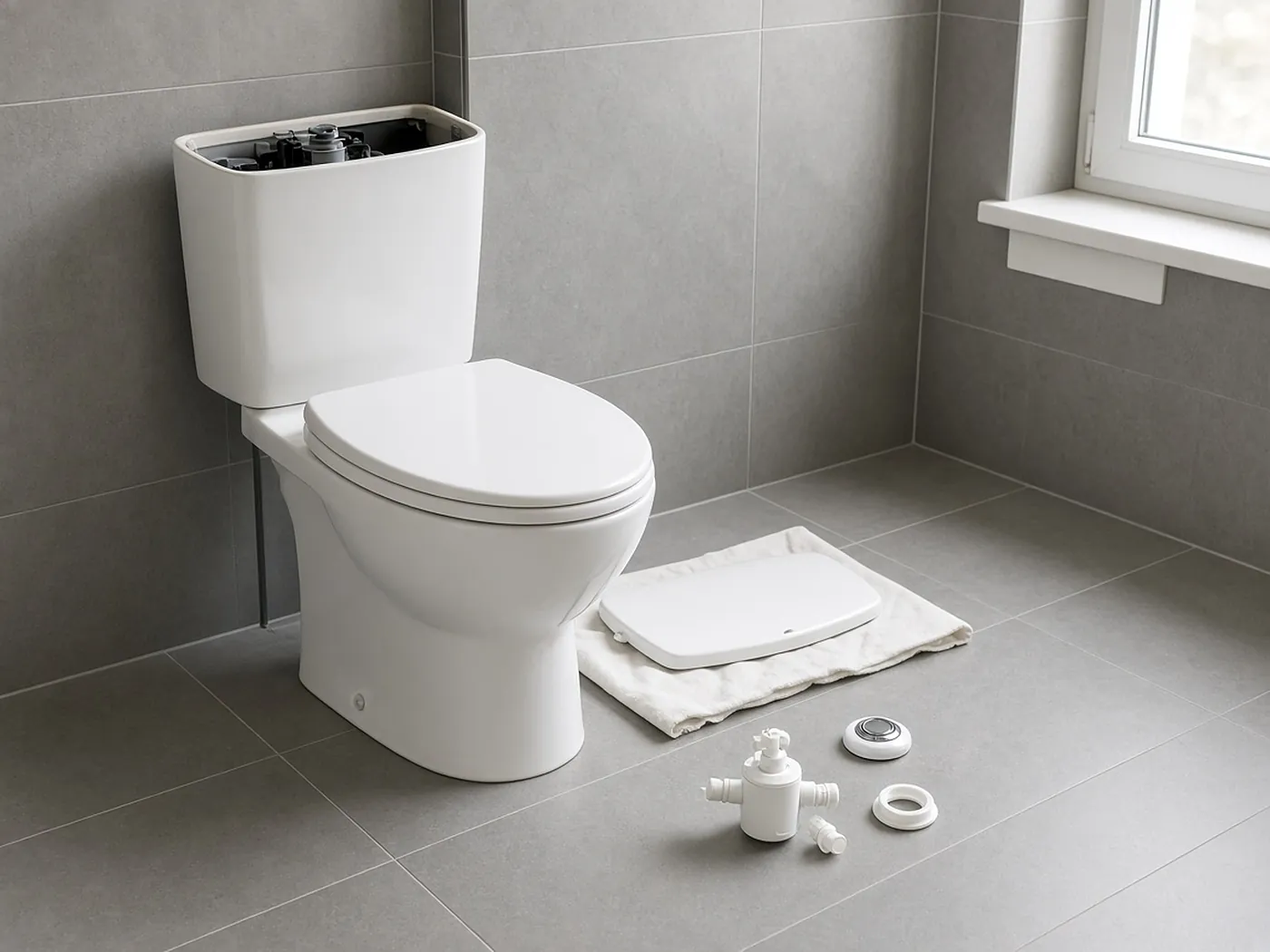
A modern toilet cistern has two main parts. The inlet valve lets water in and shuts off when the cistern is full, controlled by a float. The outlet valve sits at the bottom and lifts when you press the button, releasing water into the pan, then reseals. When either part does not seal or shut off properly, water keeps flowing.
Cause 1: a worn outlet seal
The outlet valve has a rubber seal that sits on a seat at the bottom of the cistern. Over time the rubber hardens, warps or gets coated in scale, and water slowly leaks past it into the pan. The cistern level drops, and the inlet valve tops it up, sometimes with a short hiss every few minutes. The food colouring test shows this clearly: if colour seeps into the bowl without flushing, the seal is leaking.
Cause 2: a faulty inlet valve
If the inlet valve does not shut off fully, the water level rises until it reaches the overflow and runs into the pan continuously. You may see water trickling down the back of the bowl or hear the cistern filling constantly. A worn washer, debris in the valve or a float set too high can cause this.
Cause 3: a sticking button or linkage
Sometimes the flush button does not return fully, holding the outlet valve slightly open. Jiggling the button may stop the flow temporarily, but the button or the linkage usually needs adjusting or replacing.
What you can safely check
Take the lid off the cistern carefully and see where the water is going. If it is running into the overflow tube, the inlet valve is the likely culprit. If the water level is below the overflow but you can see or hear water leaking into the pan, the outlet seal is likely worn. Note the brand of the cistern, often printed inside or on the pan, and take a photo. That helps us bring the right parts.
When to call a plumber
Modern cisterns use brand-specific parts, and fitting the wrong valve can cause leaks or poor flushing. If the toilet keeps running, a plumber can replace the worn valve or seal with the right part, adjust the water level and test that it flushes and refills correctly. If the toilet is old or parts are no longer available, replacing it with a modern water-efficient model may be the better option.
Need help with this?
If you would rather have a plumber look at it, our toilet repairs & replacement service covers this problem in Berwick and nearby suburbs.
More guides
- What to Do When a Pipe Bursts
- Signs of Tree Roots in Your Sewer
- Why Is My Drain Gurgling?
- Heat Pump or Electric Storage Hot Water?
- How to Find a Hidden Water Leak
Tell us what is going on
Use the quote form to describe the problem and add a photo or two. We reply with what we think is going on and a free, no-obligation written quote.